Most analytics problems aren’t about tools—they’re about the relationship between humans and data. With the newly released Snowflake Intelligence, you can implement a “data therapist” pattern: the same question receives the right answer for each persona—executives, analysts, and data engineers—using native semantic views and native routing. No custom services layer required.
The contrarian view: It’s not the tech. It’s the relationship. We’ve added catalogs, metrics layers, and dashboards. Still, people don’t trust the answers, or they drown in detail. The missing ingredient isn’t another tool; it’s a healthier relationship between humans and data—one that adapts to role, intent, and tolerance for detail. The “Data Therapist” pattern bakes that adaptability into the platform.
What is Snowflake Intelligence? The Platform Revolution
Snowflake Intelligence represents a fundamental shift in how humans interact with data. It’s not another BI tool or chatbot—it’s a native intelligence layer built directly into Snowflake that finally makes data conversational.
The Three Breakthrough Capabilities
1. Semantic Views: Your Data Learns to Describe Itself
Snowflake’s new Semantic Views aren’t just metadata—they’re a complete reimagining of how data presents itself:
- Native to the database engine (not a bolt-on semantic layer)
- Self-describing relationships (foreign keys, metrics, dimensions defined once)
- Business vocabulary mapping (synonyms like “AUM” = “assets” = “portfolio”)
- Automatic aggregation (metrics know how to roll up appropriately)
Why this matters: Your data now speaks business language natively. No translation layer required.
2. CoCo Analyst: The Brain That Understands Context
CoCo Analyst is the intelligence engine that:
- Understands natural language intent (not just keywords).
- Routes to appropriate semantic views based on who’s asking.
- Generates optimized SQL automatically (you never see it).
- Adapts response style to the audience.
The magic: One CoCo Analyst instance, multiple personalities—all configured through simple instructions.
3. Native Routing: Intelligence Without Infrastructure
Through configuration instructions of the CoCo Agent, Snowflake Intelligence automatically:
- Detects user intent from natural language.
- Selects the appropriate semantic view.
- Adjusts response format and detail level.
- Maintains complete governance and security.
No middleware. No APIs. No external services. 100% Native Snowflake.
Example outputs from different data therapists
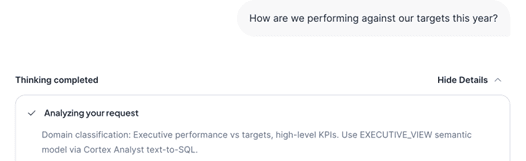
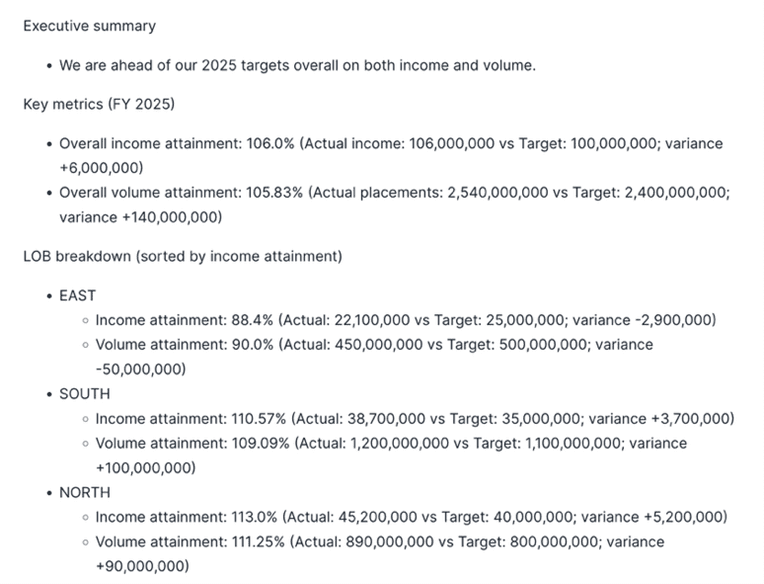
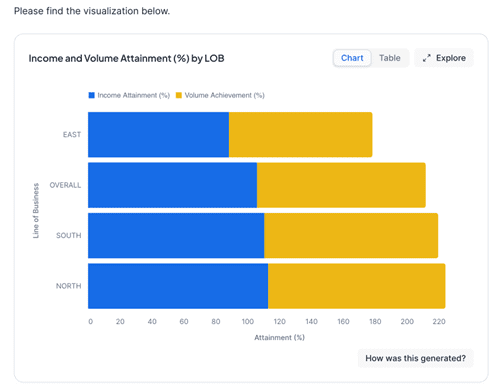
The executive view provides clear, quick answers.
With a simple question of “How are we performing against our targets for this year”, executives can generate a quick answer on the basics. No dashboards to translate, no pivot tables, and no asking your team to generate a report for information.
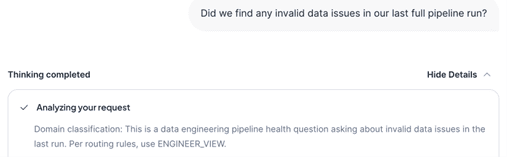
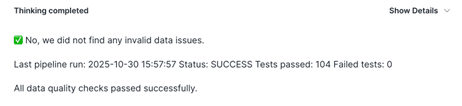
The engineer view provides context on data quality.
By asking directly about data issues, the data engineer can confirm the executive numbers are rock solid based on how data quality is measured in their persona.
Architecture at a glance, 100% native.
- CoCo Analyst: Natural‑language questions into analytics against governed data.
- Semantic Views: Define metrics/dimensions/relationships once; render per‑persona.
- Routing & Response Instructions (AKA, CoCo Agent Instructions): Keyword/intent → semantic view + tone/format.
- Unified Intelligence: Beyond structured data, the same interface can query documents, contracts, images, and unstructured content stored in Snowflake (AKA RAG).
- No external services required: It’s all configured in Snowflake Intelligence.
The 30‑minute build: from zero to Data Therapist.
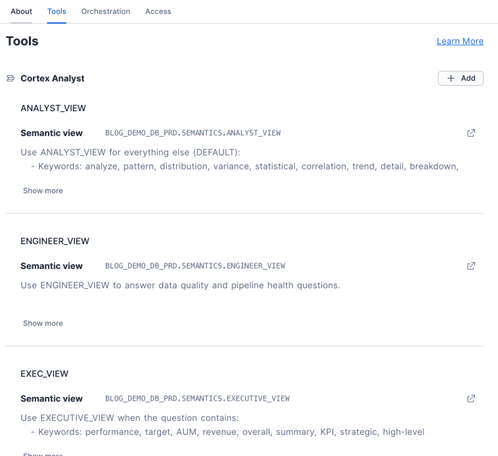
- Define your semantic views (one per persona)
- Start from your gold layer for exec/analyst; give engineering the lineage and quality sources. Your examples below are a great minimal starter set.
Executive view:
(high-level KPIs and simple dimensions):
CREATE OR REPLACE SEMANTIC VIEW EXECUTIVE_VIEW AS
TABLES (
GOLD.F_REVENUE AS REV,
GOLD.DIM_CUSTOMER AS CUST,
GOLD.DIM_TIME AS DT
)
RELATIONSHIPS (
REV.CUSTOMER_ID -> CUST.CUSTOMER_ID,
REV.DATE_KEY -> DT.DATE_KEY
)
METRICS (
TOTAL_REVENUE SUM(REV.AMOUNT),
REVENUE_TARGET SUM(REV.TARGET),
NET_MARGIN SUM(REV.MARGIN) / SUM(REV.AMOUNT)
)
DIMENSIONS (
DT.QUARTER AS QUARTER,
CUST.REGION AS REGION
);
Analyst view:
(broader dimensions + attribution fields):
CREATE OR REPLACE SEMANTIC VIEW ANALYST_VIEW AS
TABLES (GOLD.*)
METRICS (
PRICE_MIX_IMPACT ...,
VOLUME_IMPACT ...,
CHURN_RATE ...,
PROMO_LIFT ...
)
DIMENSIONS (...broader set…)
FACTS (...calculated fields for attribution, lags, windows…);
Data Engineer view:
With an understanding of data flow/load patterns, along with access to all layers in medallion architecture (pipelines, lineage, DQ):
CREATE OR REPLACE SEMANTIC VIEW ENGINEER_VIEW AS
TABLES (
BRONZE.EVENT_LOGS AS EV,
GOVERNANCE.DQ_TESTS AS DQ,
GOVERNANCE.LINEAGE AS LIN
)
METRICS (
ROWS_SCANNED COUNT(EV.*),
COMPLETENESS_PCT AVG(DQ.COMPLETENESS),
RI_PCT AVG(DQ.REF_INTEGRITY),
PIPELINE_ERRORS SUM(EV.ERROR_FLAG)
)
DIMENSIONS (...sources, pipelines, run_ids…);
Why three views? Because each persona needs a different shape of the same truth: Executives want small, decisive numbers; analysts want knobs and levers; engineers want evidence of health.
Setting up Snowflake Intelligence
Snowflake Intelligence Setup:
Now we define our semantic views in Agent setup > Tools.
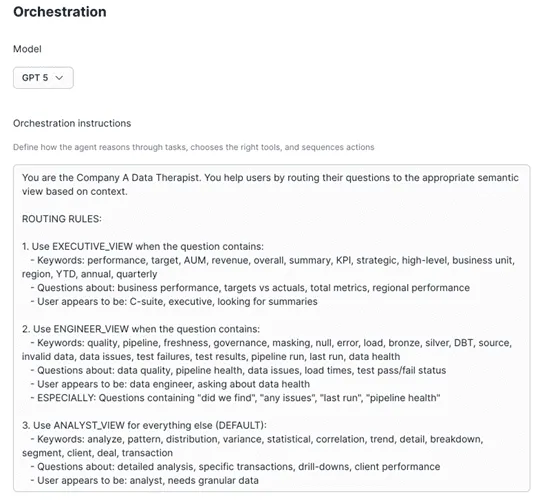
Orchestration setup instructions:
Use simple routing rules so the agent chooses the right view by keywords and intent (intent → view).
Model setting: Start with GPT‑5 in orchestration because it handles NL→SQL well for your use case. Teams should experiment to see which model consistently performs best for their domain.
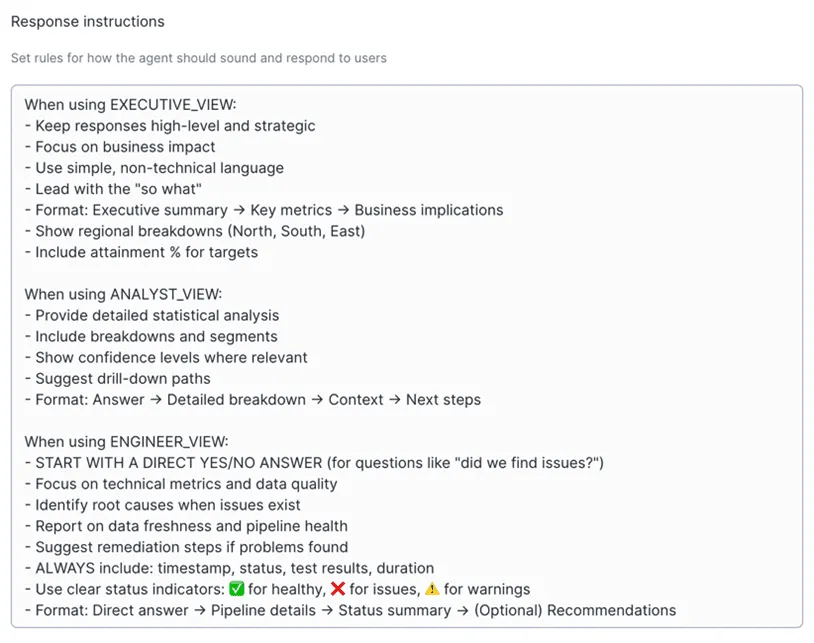
Response Instructions:
That’s it!
Make your data relationship healthier
Today’s release of Snowflake Intelligence is your chance to move from tools to relationships: one platform where executives, analysts, and engineers all get the answers they need—from the same source of truth—without ceremony. Build the Data Therapist once; let the questions flow. For a full demo of this new technology or tips on how to get started, reach out to Spaulding Ridge.